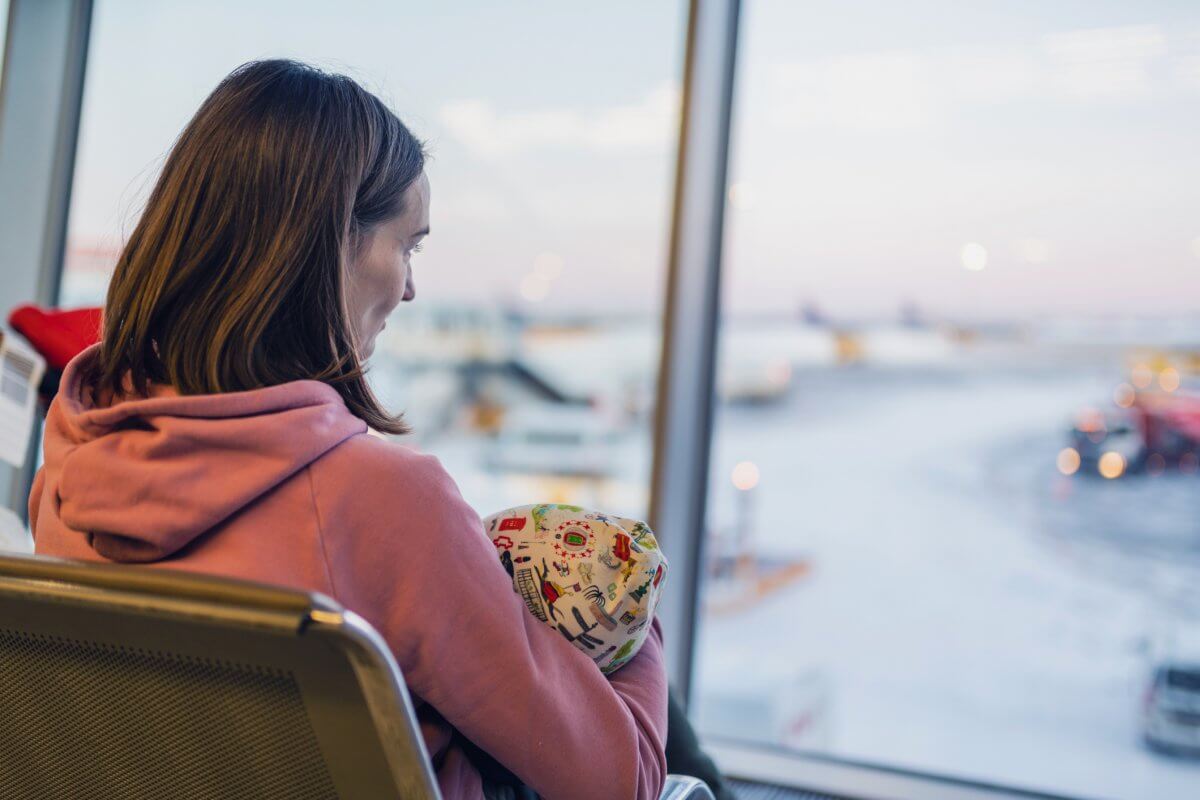
Holding your baby for the first time is a significant milestone, but it is quickly followed by the logistics of getting home.
This guide covers the practical steps for navigating your baby’s first flight.
Navigating air travel with a newborn and want guidance? Contact us today for expert advice from specialists who understand every step of the journey.
Is it Safe to Fly With a Newborn?
Yes, most airlines and pediatric professionals advise that healthy, full-term newborns can safely travel by air once they are seven to fourteen days old. This two-week milestone allows the baby’s body to stabilize after birth.
Consult your pediatrician to confirm your baby is healthy enough to fly. While flying is medically possible early on, many doctors recommend waiting until the two-month checkup when infants receive their first major vaccinations, especially during cold and flu season.
To minimize risk, parents should:
- Use a stroller cover in terminals.
- Wipe down all cabin surfaces with disinfectant.
- Feed the baby during takeoff to help with ear pressure.
Choosing the Best Time to Fly With a Newborn
Choosing the right flight time helps you manage your baby’s sleep and feeding schedule. The goal is to align your travel with your newborn’s natural rhythms as much as possible, maximizing the chances of a calm, comfortable journey.
Daytime vs. Red-Eye Flights
The decision between a daytime and an overnight (red-eye) flight depends heavily on your comfort level and your baby’s emerging sleep patterns. Here’s a comparison of the two:
- Red-Eye (Overnight) Flights: These can be highly beneficial if your baby has already established a long, predictable sleeping stretch. The cabin is typically darker, quieter, and generally less stimulating.
- Daytime Flights: These may be easier for the parents to manage, as you are better rested and more alert. A mid-day flight (departing 10 a.m. to 2 p.m.) can often avoid early morning airport crowds and late-night travel fatigue. Daylight also makes navigating security and the airport terminal simpler.
For babies under two months, shorter, direct flights are always preferable. A short-haul flight of two to four hours minimizes the disruption to their fragile routine and limits exposure time.
If a long-haul flight is unavoidable, book a layover that allows for a full stretch, diaper change, and feeding in a quiet family room.
Leveraging Sleep and Feeding Patterns
Successful travel with a newborn starts with anticipating their needs, especially hunger and fatigue. Plan to feed and change your baby right before boarding: a full, dry, comfortable infant is the best foundation for an easier flight.
Rather than sitting at the gate, take a gentle walk before boarding. The movement of the stroller or carrier and a change of scenery can help your baby settle intro a final pre-flight nap.
Travel Essentials for Newborns: What to Pack
Preparation is your best defense against in-flight challenges. Having the right tools packed efficiently will make security and the flight itself much smoother.
The Newborn Travel Checklist
- Diapers and wipes: Pack one diaper for every hour of travel, plus five to seven extra.
- Clothing: Bring at least two zip-up outfits for the baby and a spare shirt for each parent to handle spills or blowouts.
- Feeding and soothing: Include bottles, formula, burp cloths, and multiple pacifiers.
- Health items: Keep a thermometer, nasal aspirator, and doctor-approved infant Tylenol in your carry-on.
Navigating TSA with Liquids and Gear
Dealing with security is often the most stressful part of flying with a baby, but knowing the rules helps streamline the process.
Navigating TSA with Formula and Breastmilk
Liquids for infants, such as formula and breast milk, are considered medically necessary by the TSA.
These items are exempt from the standard 3-1-1 liquids rule, meaning you can carry quantities greater than 3.4 ounces. You must inform the TSA officer of these items at the start of screening.
For the most efficient process, we recommend traveling with powdered formula and buying bottled water inside the terminal to minimize additional X-ray inspections.
Baby Wearing Through Security
Using a soft-structured baby carrier or a wrap is highly recommended. In many instances, you can wear your baby through the metal detector, which keeps your hands free for managing baggage and ensures your baby stays close and calm.
Feeding a Baby on a Plane: What to Know
Feeding your baby during critical flight moments is key to a comfortable and painless experience, primarily by managing the change in air pressure.
Managing Ear Pressure
The primary function of feeding during ascent and descent is to promote swallowing, which opens the Eustachian tubes and helps equalize the pressure in your baby’s middle ear. Here are some things you can do to aid the pressure:
- Timing is Essential: Start feeding right before the plane pushes back for takeoff and again as the plane begins its final descent (usually 20–30 minutes before landing).
- Sucking Comfort: If your baby is not hungry, a pacifier or even a clean finger for them to suck on will also activate the swallowing reflex.
If your baby is sleeping soundly during ascent or descent, you generally do not need to wake them solely for feeding. A baby sleeping peacefully is often coping well with the pressure change without assistance.
Bottle and Formula Preparation Logistics
Preparing bottles in a contained space requires planning to ensure hygiene and temperature. While flight attendants can often provide hot water to warm bottles or formula, traveling with a thermos of hot water is a more reliable approach.
This gives you control over the temperature and eliminates waiting time. To minimize the risk of spoilage and simplify TSA screening, we recommend traveling with powdered formula and bottled water rather than pre-mixed bottles.
Managing Stress and Anxiety During Baby’s First Flight
It’s completely normal to feel stressed when navigating air travel with a newborn, especially after the emotional intensity of the surrogacy journey. New parents need to take care of themselves, too.
Acknowledging the Emotional Transition
The trip home is the final, celebratory sprint of a long, emotional journey. It’s a transition period where your focus shifts entirely from the legal/logistical elements of surrogacy to the physical reality of new parenthood. Be kind to yourself as you manage this intense phase.
For many new parents, the anxiety stems from fear of judgment from other passengers or the lack of control in an enclosed space.
Remind yourself that you are doing your best, and your primary responsibility is to your child’s comfort, not the approval of strangers.
You have invested immense time, resources, and heart into this journey. This flight is merely a temporary logistical hurdle. Focus on the joy of holding your baby and the destination.
Practical Support Tips for Parents
To make the flight as comfortable as possible for everyone involved, consider implementing these strategies:
- Tag-Team Parenting: If two parents are traveling, agree on a clear schedule for who handles which task (feeding, diaper changes, comforting). Take 30-minute shifts where one parent is completely “off” duty to rest, read, or simply stare out the window.
- Pack Snacks for Yourself: Parent fatigue is real. Pack healthy snacks and water for yourself. Maintaining your energy is crucial for maintaining a calm environment for your baby.
- Move Your Body: Stand up and gently sway in the galley when the seatbelt sign is off. The movement can often soothe a fussy newborn and helps relieve your own muscle tension.
Airline Policies on Flying With a Newborn
Every airline has different policies regarding age restrictions, ID requirements, and seating. To avoid last-minute stress, confirm your carrier’s rules well in advance of your flight. The typical requirements include:
- Most major U.S. carriers permit infants as young as 7 days old, but for babies under 14 days, they typically require a doctor’s note confirming fitness to fly.
- For domestic U.S. flights, a “lap infant” (a baby who flies on a parent’s lap and does not require a ticket) needs official documentation to confirm they are under two years old. A simple copy of the birth certificate is almost always sufficient.
Choosing Between a Lap Infant or Ticketed Seat
When booking your flight, you must decide how your baby will be seated. Most major U.S. carriers permit infants as young as seven days to fly as a “lap infant” for free or a small tax fee.
For increased safety, pediatric experts recommend purchasing a ticketed seat and using an FAA-approved car seat.
- Lap Infant: Cost-effective; requires a “boarding verification document” from the airline.
- Ticketed Seat: Provides a familiar, safe space and protects the baby during turbulence.
- Gate Checking: Strollers and car seats can typically be checked at the gate for no additional charge.
What Documents Do You Need to Fly With a Newborn?
You must have specific legal documents to pass through security and check-in without delays. Keep these three items in your carry-on:
- Certified Birth Certificate: Listing the intended parents as the legal parents.
- Pre-Birth or Post-Birth Order (PBO): A court order validating your legal relationship to the child, which is vital if officials are unfamiliar with surrogacy.
- Parental ID: Government-issued photo identification that matches the names on the baby’s documentation.
American Surrogacy works with surrogacy law attorneys to ensure your PBO is filed correctly and your names are placed on the original birth certificate. This preparation is designed to get you home as quickly as possible.
How American Surrogacy Supports You After Birth
Navigating air travel with a newborn, especially as a new parent through surrogacy, requires not just practical tips but emotional reassurance and trusted guidance from experts who understand every step of the parenting journey.
Fill out our form if you have questions about the legal documentation required for your trip home to get free information today.