 Current Match Time:

Finding out a surrogate didn't pass her medical screening is a major setback. It’s okay to feel discouraged, but this isn't the end of your journey.
In this guide, we explain what happens if a surrogate fails medical screening, the most common reasons for disqualification and what your next steps look like. We also outline how American Surrogacy’s pre-screening process and Limited Risk Program help reduce disruption and keep your journey moving forward.
If you’re navigating this situation and need clear guidance, contact us today.
What Happens if a Surrogate Fails Medical Screening?
When a fertility clinic does not grant medical clearance, it can feel like progress has stalled. However, not every screening outcome means the end of a match. In some situations, the issue is temporary and can be resolved.
Here’s what you should know about the differences between temporary deferral and permanent disqualification:
Temporary Deferrals
A surrogate may not receive immediate clearance due to a correctable concern. This can include low iron or vitamin D levels, a hormone imbalance or a treatable infection. In these cases, the clinic typically pauses the cycle for 30 to 60 days while the condition is addressed.
Permanent Disqualifications
Screening may reveal an anatomical or medical issue that cannot be safely resolved. Significant uterine scarring, persistently thin uterine lining or certain chronic health conditions may prevent approval for embryo transfer.
In these cases, you’ll need to match with another surrogate. While this news can be difficult, screening exists to protect your embryo and support the strongest chance of a healthy pregnancy. Through American Surrogacy’s Limited Risk Program, you can move forward with another qualified surrogate without starting over financially.
Why Would a Surrogate Fail Medical Screening?
It can be confusing to learn that a woman with several healthy, uncomplicated pregnancies does not receive medical clearance. A surrogate might be perfectly healthy in her daily life but still not be a candidate for in vitro fertilization. The requirements for an embryo transfer are much stricter than a natural pregnancy.
Here are several reasons a surrogate might fail medical screening:
-
Undetected Uterine Concerns: Specialists may find polyps, fibroids or subtle abnormalities during a saline sonogram or hysteroscopy that went unnoticed during her previous natural pregnancies.
-
Hormonal Response Issues: Her body may not respond predictably to medications such as estrogen or progesterone, making timing and lining development more difficult to control.
-
Body Mass Index (BMI) Requirements: Fertility clinics may have stricter BMI requirements to minimize the risk of preeclampsia or gestational diabetes.
Some agencies match intended parents with a surrogate without completing a detailed medical records review. When this happens, concerns that could have been identified earlier may not surface until the clinic appointment, leading to failed clearance.
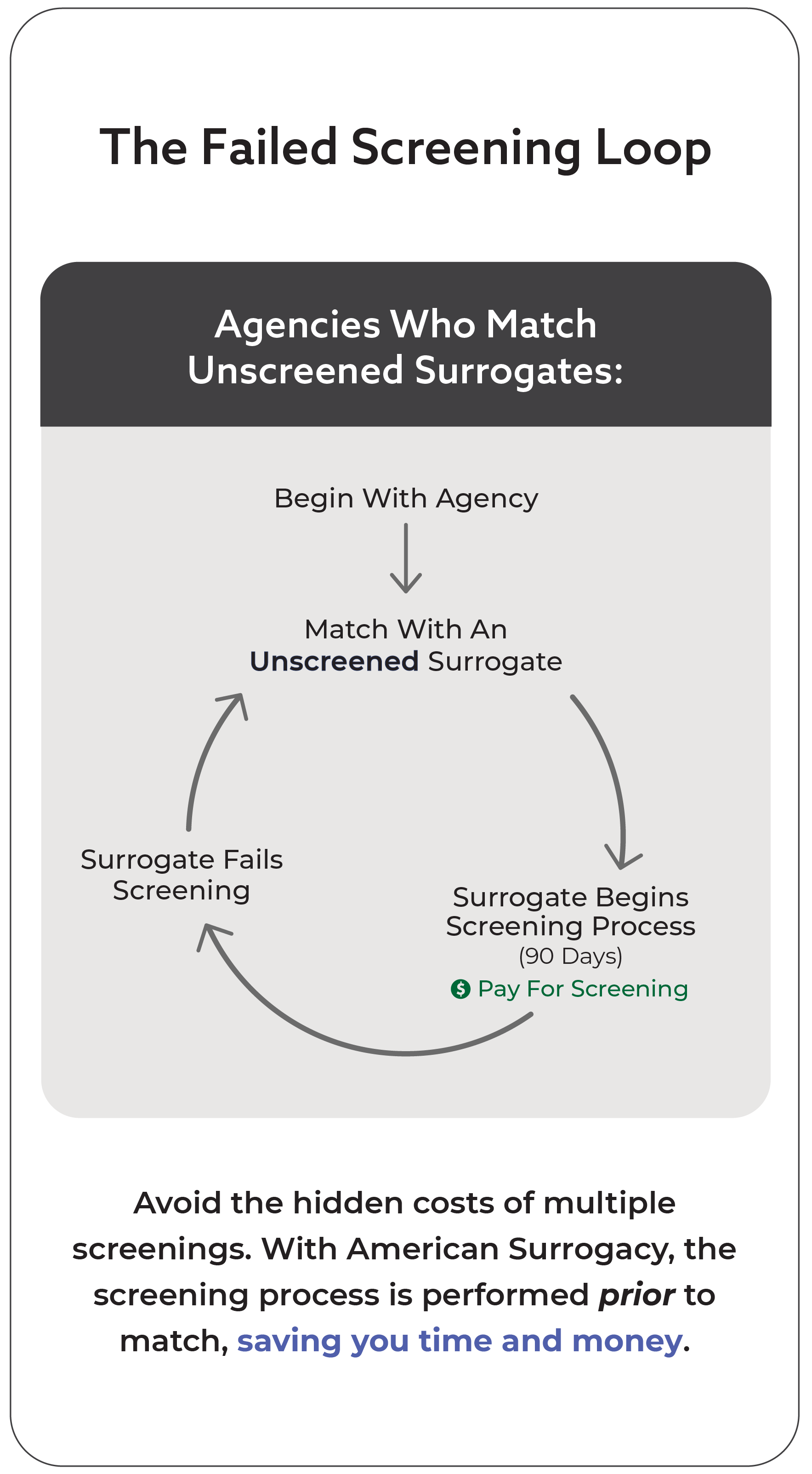
At American Surrogacy, we pre-screen surrogates before presenting a potential match. By reviewing her medical history early in the process, we can reduce your chances of getting stuck in the failed screening loop.
How Often Do Surrogates Fail Medical Clearance?
About 98% of women who inquire about becoming a surrogate do not ultimately qualify. Only about 2% pass the full screening process.

Because surrogacy standards are so strict, thorough screening is essential. Agencies that complete detailed pre-screening before presenting a match can reduce the likelihood of disqualifications at the fertility clinic stage.
At American Surrogacy, we require potential surrogates to:
-
Fill out a comprehensive social and medical history form.
-
Provide medical records from prior pregnancies and deliveries for review.
-
Complete a psychological evaluation with a licensed mental health professional.
By the time your surrogate attends your fertility clinic’s medical clearance appointment, she has already completed multiple layers of screening with our agency. While no process can eliminate every risk, early vetting improves the likelihood that you match with surrogate who receives clearance.
What Happens Next if Your Surrogate Isn’t Approved?
When you work with American Surrogacy, we’ll handle the next steps if your surrogate failed medical screening. You don’t have to manage the logistics or communication on your own.
Rematching might feel like a step backward, but you aren't starting from scratch. Your paperwork is done and your embryos are ready; we just need to find the right person to carry them.
Because we maintain an active pool of pre-screened candidates, we are able to move forward quickly. We’ll work to identify another qualified surrogate so that your timeline stays as close to the original plan as possible.
Does a Failed Screening Affect the Legal Process?
The medical and legal phases of the surrogacy process are intentionally structured to occur in order. You cannot draft a contract until your surrogate receives medical clearance, and she cannot begin medications until the agreement is finalized.
Waiting for the clinic’s approval before starting the legal process may feel like an added delay, but this structure exists to protect you. Addressing medical clearance first helps prevent situations where contracts are signed before a surrogate is formally approved.
By addressing eligibility upfront, you reduce the risk of avoidable legal and financial complications later in the journey.
Cost Implications of Surrogate Medical Screening Failure
Many intended parents worry about the financial impact of failed medical clearance. Some surrogacy agencies require intended parents to pay a new match fee before moving forward with another candidate.
At American Surrogacy, our Limited Risk Program is designed to reduce that uncertainty. If your match does not receive medical clearance, you are able to move forward with another qualified surrogate without paying additional fees.

Our Surrogate Failed Medical Screening and We Feel Defeated — What Should We Do?
It is okay to feel discouraged. Whether you are a gay couple ready to start your family or intended parents who have spent years navigating infertility, a medical setback can feel like a personal blow. It is natural to experience disappointment and timeline anxiety.
While it’s hard to hear, this is exactly what screening is for. It’s better to find out now — before an embryo transfer — that a surrogate isn't the right fit, rather than facing a failed transfer or a high-risk pregnancy later.
If you need help finding a new surrogate after a failed screening — especially after pursuing an independent journey — contact us today. American Surrogacy can help you move forward with a pre-screened gestational carrier.
How American Surrogacy Reduces the Risk of Screening Setbacks
While no screening process can eliminate every variable, there are ways to reduce the likelihood of setbacks. American Surrogacy minimizes risk by:
-
Setting clear health and lifestyle requirements
-
Reviewing medical records before presenting a surrogate as a potential match
-
Completing psychological and background screenings for each candidate
-
Providing financial protection through our Limited Risk Program

No one wants to deal with a medical disqualification, but having a plan in place makes it manageable. If you’re facing a failed screening and need help figuring out what’s next, let’s talk. We could help you match with one of our pre-screened surrogates.
Disclaimer: This content is for informational and educational purposes only and does not constitute medical advice, diagnosis or treatment. Always seek the advice of a licensed healthcare provider with any questions you may have regarding a medical condition or procedure.