 Current Match Time:

As an intended parent, the surrogate medical clearance appointment is one of the most significant milestones in your journey.
This appointment is the final step in clearing your surrogate for an embryo transfer.
If you have questions about the surrogate medical screening process or want to start your family-building journey, fill out our contact form today.
In this guide, we will break down what happens at the clinic, which medical tests are required and how long the appointment takes.
The surrogate medical clearance appointment typically lasts several hours and takes place at your chosen fertility clinic. The process is conducted by a reproductive endocrinologist, the specialized physician who will eventually perform your embryo transfer. Here’s what screenings are done for surrogates during this visit: Physical exam to evaluate the surrogate’s overall health Uterine evaluation to confirm the uterus can safely support an embryo transfer and pregnancy Bloodwork to assess hormone levels and overall reproductive health Infectious disease testing for the surrogate and often her partner Substance screening to ensure a safe and healthy environment for the pregnancy Saline sonogram to provide a clear view of the uterine cavity and detect abnormalities Mock embryo transfer to map the transfer process and optimize placement accuracy This appointment is the definitive assessment that determines whether the surrogate receives formal medical clearance to proceed. To make this step as seamless as possible, American Surrogacy coordinates all travel details and logistics for your surrogate. You don't have to worry about the “how.” The travel costs are covered by the fees you have already paid, allowing you to focus entirely on the journey.What Happens at the Surrogate Medical Clearance Appointment?
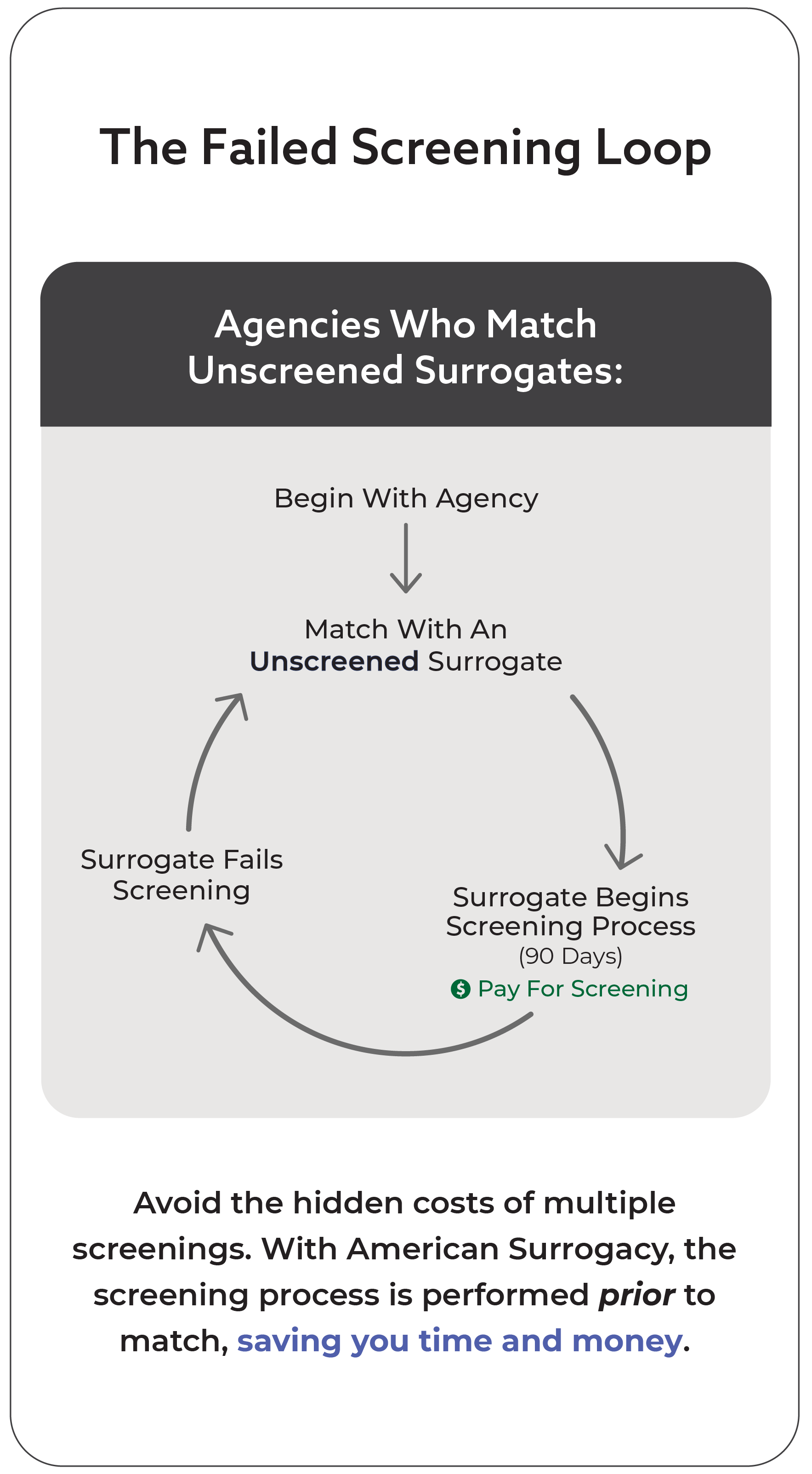
The primary purpose of this visit is to confirm that your surrogate’s uterus is healthy and capable of supporting a pregnancy to full term. The screening also verifies that her hormones respond appropriately to fertility medications and helps establish the transfer protocol the clinic will follow. Ultimately, 98% of women who inquire about becoming a surrogate do not ultimately qualify. Only about 2% pass the full screening process. Because so few candidates meet the requirements, early vetting matters. At American Surrogacy, we complete extensive pre-screening before presenting a potential match to you. This increases the likelihood that the surrogate will receive medical clearance.Why the Clinic Medical Clearance Appointment Is So Important

What Medical Tests Are Required During the Surrogate Medical Clearance Appointment?
It is important to note that protocols can vary based on clinic preferences and the specific requirements of your reproductive endocrinologist. However, most clinics use the same tests to ensure the uterus is healthy:
Hormone and Bloodwork Panel
The clinic will draw blood to evaluate several key health markers. This typically includes a thyroid panel — since thyroid dysfunction can affect pregnancy stability — along with estradiol and progesterone levels to assess hormonal readiness.
Infectious disease screening is also required for the surrogate and, in most cases, her partner.
Uterine Evaluation Tests
A saline sonogram (also known as a saline infusion sonogram) is frequently used to evaluate the uterine cavity.
During this procedure, sterile saline is injected into the uterus while an ultrasound is performed. This allows the doctor to see if there are any polyps, fibroids or scar tissue that could interfere with implantation.
If you’re familiar with in vitro fertilization (IVF), you may have heard discussions comparing a saline sonogram vs. an HSG.
The key difference between the two procedures is what they primarily evaluate. A saline sonogram focuses on the uterine environment, while an HSG uses contrast dye and X-rays to evaluate the uterus and determine whether the fallopian tubes are open.
Because a gestational surrogate carries an embryo created through IVF, her fallopian tubes are not involved in the pregnancy process. For that reason, many clinics prefer saline sonograms for gestational carrier screening, though some may still use an HSG to evaluate the uterine cavity.
Is a Mock Transfer Necessary for Surrogacy?
While not every clinic requires it, a mock embryo transfer is often recommended. During this procedure, the physician gently inserts a thin catheter through the cervix to map the pathway into the uterus. This helps identify any potential anatomical challenges and allows the medical team to determine the optimal placement for the actual embryo transfer.
Some clinics also recommend a mock cycle for surrogacy. In this process, the surrogate follows the same medication protocol used for a real transfer so the clinic can evaluate how her uterine lining responds.
By confirming the body’s response in advance, the team can adjust medication timing or dosage before an embryo is ever thawed, reducing the risk of a failed transfer.
Can Intended Parents Request Additional Testing?
In many cases, yes. Depending on clinic policies and medical guidelines, intended parents may request additional evaluations, such as expanded genetic screening or more advanced uterine imaging beyond the standard saline sonogram.
If you have specific medical concerns, it’s best to discuss them with your surrogacy specialist and reproductive endocrinologist early in the process. They can help you determine what is appropriate and medically justified.
Sometimes, the surrogate medical clearance appointment reveals issues that need to be addressed before moving forward. Common reasons for a delay include: Abnormal uterine findings (like a small polyp that needs removal) Hormone imbalances or a thin uterine lining response Positive results for a treatable infectious disease or urinary tract infection The presence of fibroids In many cases, a surrogate isn't disqualified but rather placed on a medical hold. The doctor may pause the process for 30 to 60 days to clear an infection, adjust thyroid medications or perform a minor corrective procedure. While some delays are unavoidable, others can stem from incomplete pre-screening. If a surrogate’s medical records aren’t thoroughly reviewed before matching, potential concerns may not surface until this final clearance appointment. At American Surrogacy, we work to reduce that risk. Before a surrogate is ever presented as a potential match, we complete extensive medical and psychological pre-screening. By identifying red flags early, we aim to minimize avoidable delays at the clinic stage and help keep your timeline on track.What Could Delay or Prevent Medical Clearance?
No, attendance is not required. Some intended parents choose to attend to offer support to their surrogate, while others may be unable to travel due to work or distance. If your surrogate consents and the clinic allows it, you can often join via phone or video call for the “wrap-up” portion of the day where the doctor discusses the findings. If you can't be there, check in with her afterward. It’s a long day of tests, and a quick text is usually appreciated.Do Intended Parents Need to Attend the Medical Clearance Appointment?
What Happens After the Medical Clearance Appointment?
Once the doctor issues final clearance, the surrogate medical screening process ends and the legal phase begins.
Before any medications are started for the actual embryo transfer, the legal contract between you and your surrogate must be finalized. After the contract is in place, the surrogate can begin her medication protocol, and the transfer will be officially scheduled.
In total, this part of the process takes about two to three months. The medical screening appointment itself takes a full day. Most of the testing is completed during this single visit, although some lab results may take several days to return. Once the surrogate receives formal medical clearance, the legal contract must be finalized and signed by all parties before any medications begin. Finally, the clinic will start the surrogate on a carefully timed medication protocol designed to prepare her uterine lining for transfer. Keep in mind that the exact timeline can vary based on the clinic’s availability, contract negotiations, the surrogate’s natural menstrual cycle and other individual factors.How Long Is the Process From Medical Clearance to Embryo Transfer?
At American Surrogacy, we believe in being proactive to ensure your journey is as smooth as possible. Before a surrogate is even presented to you as a match, we have already completed thorough pre-screening. Here’s how our agency ensures safety and reduces risk: Our team reviews her past pregnancy and delivery records before you ever spend money on a clinic visit. We request a recommendation letter from her OB-GYN. We coordinate a professional psychological screening to ensure she is emotionally prepared for gestational surrogacy. We manage clinic scheduling and travel arrangements. By the time your surrogate walks into the fertility clinic, she has already passed multiple layers of internal screening. We want to give you the highest level of confidence as you move toward the embryo transfer. Get in touch with a surrogacy specialist today to learn more about our screening process. Disclaimer: This content is for informational and educational purposes only and does not constitute medical advice, diagnosis or treatment. Always seek the advice of a licensed healthcare provider with any questions you may have regarding a medical condition or procedure.How American Surrogacy Supports You Through Your Surrogate's Medical Clearance Appointment