 Current Match Time:


Finding a surrogate to help you become parents can be an exciting part of your surrogacy journey. However, it’s completely normal to have some reservations about partnering with a stranger for a year or more.
That’s why, at American Surrogacy, we make sure every prospective surrogate who works with us is physically and emotionally healthy and ready to commit to the surrogacy process.
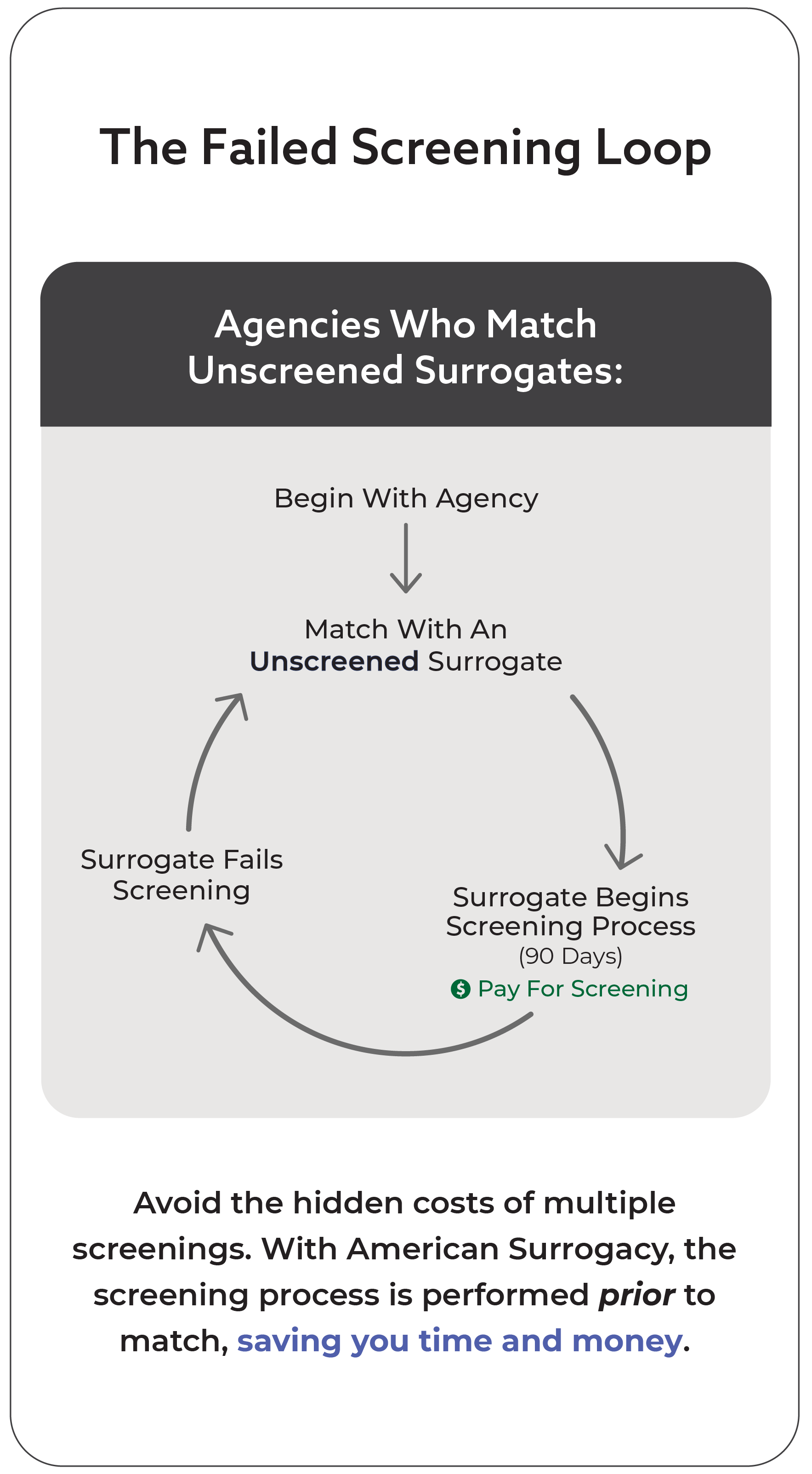
At American Surrogacy, much of this work begins before a potential match is ever presented to you. This catch-all step prevents you from matching with someone who is medically or emotionally unable to move forward, saving you months of potential delays.
Below, we explain each step of the surrogate medical screening process, what can lead to disqualification and how long it typically takes. If you have questions about the process or are ready to take the next step, fill out our short contact form today.
The surrogate medical screening process is designed to confirm that a woman is healthy enough to carry a pregnancy for intended parents. It isn't a single test but rather a series of steps to ensure she’s prepared for the demands of surrogacy. Before a woman is ever presented as a potential match, American Surrogacy performs pre-screening to ensure she meets the baseline requirements. These requirements are based on guidelines from the American Society for Reproductive Medicine (ASRM), which establish widely accepted medical and psychological standards for surrogacy. Our team then carefully reviews a potential surrogate’s medical records, including her previous pregnancy and delivery history, to confirm that her health history supports a safe surrogacy journey. These records include:: An official clearance letter from her personal physician A thorough review of her social and medical history A psychological evaluation with a licensed mental health professional While some agencies wait until after you've paid a match fee to start screening, we do the heavy lifting first. We don't want you to invest your heart and budget into a match that isn't medically viable. Once you match with a surrogate, we help transfer her medical records to your fertility clinic. This includes prenatal flowsheets, labor and delivery summaries and well-women exam results. Your fertility clinic will review these documents to ensure there are no historical concerns. While our agency performs an initial screening of these records, your clinic holds the final authority to confirm she meets their requirements. The final step is the in-person screening at your clinic. During this appointment, the medical team performs a physical exam, bloodwork (to test for infectious diseases and substances) and a saline sonogram or hysteroscopy to evaluate the uterine environment. If abnormalities are found, such as uterine polyps or thin lining, the doctor may delay clearance for treatment or, in some cases, disqualify the surrogate. To protect you, American Surrogacy offers a Limited Risk Program. If your surrogate fails to receive medical clearance at this stage, our program allows you to match with another qualified candidate without paying additional fees.What Is the Surrogate Medical Screening Process?

Step 1: Pre-Screening With Our Agency

Step 2: Medical Records Review at Your Fertility Clinic
Step 3: Surrogate Medical Clearance Appointment at Your Fertility Clinic

What if My Surrogate Lives in a Different State Than My Fertility Clinic?
It is very common for intended parents and their gestational carrier to live in different parts of the country. If your surrogate needs to travel to your fertility clinic for her medical screening process, we manage the logistics.
American Surrogacy books her flights, hotel and transport using the agency fees you’ve already paid, so you don't have to manage a travel itinerary on top of everything else. We ensure she arrives at your clinic rested and ready for her evaluation.
The surrogate medical screening process addresses mental health as well as physical health. Emotional readiness is just as important as medical clearance. As part of our pre-screening process, every potential surrogate completes a psychological evaluation with a licensed mental health professional. This conversation explores her mental health history, her understanding of surrogacy, and the strength of her personal support system. The evaluation follows guidelines set by the American Society for Reproductive Medicine, which help ensure that each gestational carrier is prepared for the emotional responsibilities of surrogacy. We make sure she understands the reality of carrying a baby for another family and has a solid support system at home to lean on during the process.The Role of the Psychological Evaluation in Your Surrogate's Medical Screening
How Many Surrogates Pass the Medical Screening Process?
Around 98% of women who inquire about becoming a surrogate do not ultimately pass the screening process, with only about 2% advancing to the clinic evaluation stage.
This is why our pre-screening process, especially our early medical record review, is so important. By carefully reviewing a candidate’s records before matching, we significantly reduce the likelihood that intended parents will match with a surrogate who later fails clinic approval.
This additional step helps protect intended parents’ time, emotional investment, and financial commitment by identifying potential medical disqualifiers as early as possible.

At American Surrogacy, we complete extensive pre-screening before presenting you with a possible match. This means the woman you meet will likely pass your fertility clinic’s medical screening.
While it’s impossible to eliminate every risk, vetting surrogates early helps reduce delays, disrupted matches and unexpected expenses. We want to protect both your timeline and your investment.
What Could Disqualify a Surrogate During Medical Screening?
Surrogate medical screening is designed to identify risks that could jeopardize a pregnancy. Common reasons for disqualification include:
-
Uterine Issues: Discovering significant scarring, polyps or fibroids during a saline sonogram
-
BMI and Health Conditions: Not meeting the clinic’s specific BMI requirements or having an uncontrolled condition like high blood pressure
-
Lifestyle Factors: Positive tests for substances or certain medications that are unsafe during pregnancy
-
Medical History: A history of certain autoimmune disorders or significant pregnancy complications
It can help to view disqualification as a protection, not a rejection. We want to ensure the journey remains safe for the surrogate and provides the highest possible chance of success for your embryo.
The exact timeline depends on clinic availability and how quickly lab results are processed. Here's how long you can expect each step of the process to take: Pre-Screening: This is completed by American Surrogacy before you are matched. Medical Records Review: Once matched, it typically takes one to two weeks for your clinic to review and approve her files. Surrogate Medical Clearance Appointment: This is a two-to-three-hour appointment. Laboratory results (bloodwork and cultures) can take one to three weeks to return. In total, from the time of matching to final medical clearance, the surrogate medical screening process usually takes one to two months.Timeline: How Long Does Surrogate Medical Screening Take?
Why American Surrogacy’s Pre-Screening Matters
A strong match starts long before you ever meet your surrogate.
At American Surrogacy, we complete extensive medical and psychological pre-screening before presenting you with a possible match.
This extra step helps reduce the risk of unexpected issues during clinic screening and lowers the chances of a disrupted match.
No screening process can eliminate every risk, but vetting surrogates early protects your time and your investment. If you want to start your journey with a pre-qualified match, reach out to us today.
Disclaimer: This content is for informational and educational purposes only and does not constitute medical advice, diagnosis or treatment. Always seek the advice of a licensed healthcare provider with any questions you may have regarding a medical condition or procedure.